Best Place On Body For B12 Injection Vitamin B12 Injection Sites: All You Need to Know
Vitamin B12 Injection Sites: All You Need to Know (and the best place on body for b12 injection)
If you’ve ever been told to start vitamin B12 injections, you’ve probably wondered something very practical: where exactly do I inject? Choosing the wrong injection site can mean unnecessary discomfort, poor absorption, or making it harder to stay consistent with your dosing. In this guide, I’ll walk you through common vitamin B12 injection sites, what makes each site appropriate, and how to think about the best place on body for b12 injection based on real-world constraints I’ve seen in clinic and at-home injection routines.
My goal is to help you make informed, safer choices with clear anatomical landmarks and practical “what to watch for” guidance—without guesswork.
First: what “injection sites” really mean for B12
Vitamin B12 injections are typically given either intramuscular (IM) or subcutaneous (SC), depending on the formulation and your prescriber’s instructions. The difference isn’t cosmetic—it changes how the medication is deposited and how your body absorbs it.
- IM (intramuscular): delivered into muscle tissue (commonly the deltoid, vastus lateralis, or ventrogluteal/dorsogluteal region).
- SC (subcutaneous): delivered into the fatty layer under the skin (commonly the abdomen or outer thigh area, depending on site guidelines).
In my hands-on work guiding patients through self-injections, the most common issue wasn’t “people didn’t care”—it was mismatch: using a site that’s appropriate for SC when their prescription/technique required IM, or injecting too close to bony landmarks. That’s why the “best place” can’t be answered without knowing whether your dose is SC or IM.
Common vitamin B12 injection sites (and when each is a good fit)
Below are widely used injection sites. Your prescriber or nurse may have you rotate sites to reduce local irritation.
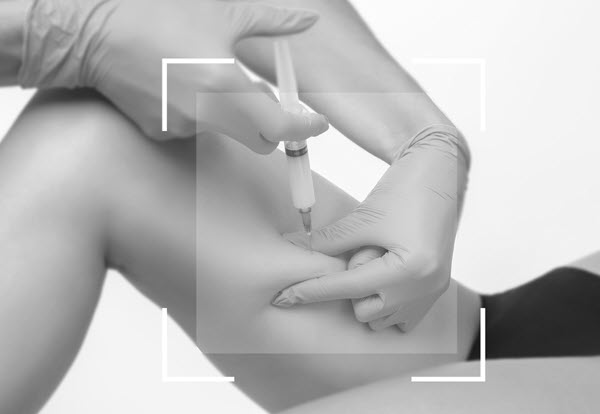
1) Vastus lateralis (outer thigh) — a frequent choice
The vastus lateralis (outer mid-thigh) is one of the most practical sites for many people—especially for at-home administration—because it’s relatively accessible and easy to consistently locate.
- Best for: often used for IM injections and sometimes SC depending on your prescribed route and needle guidance.
- Why it works: consistent muscle thickness in most adults makes IM deposition more reliable than very small or poorly developed muscle targets.
- Real-world tip: if you feel you can pinch enough tissue, it may indicate a route that expects subcutaneous placement—so pay attention to your specific SC vs IM instructions.
2) Deltoid (upper arm) — good, but not always easiest
The deltoid is the classic “upper arm” site, frequently used for IM injections.
- Best for: IM dosing when someone else is available to help, or when you’re comfortable locating the site safely.
- Why it works: it’s convenient for clinics and caregivers.
- Limitation I’ve seen: many people struggle to inject accurately into the deltoid by themselves, which can lead to shallow placement or inconsistent technique.
3) Ventrogluteal region (hip) — often favored for IM
The ventrogluteal region (front/side of the hip) is commonly recommended in clinical practice for IM injections because it’s farther from major surface nerves and arteries when landmarked correctly.
- Best for: IM injections, typically in professional or caregiver-assisted settings.
- Why it works: it can offer a safer distance from critical structures when correctly located.
- Limitation: landmarking can be harder for self-injection until you’re trained.
4) Abdomen (SC) — convenient for subcutaneous dosing
For subcutaneous injections, the abdomen (often the front/side belly area) is frequently used because the fatty layer is accessible.
- Best for: SC dosing when approved by your prescriber.
- Why it works: SC delivery targets the fat layer, which is usually easy to access.
- What to watch: avoid areas near scars, irritated skin, or bruising.
So what is the “best place on body for b12 injection”?
In practice, the “best” site is the one that matches your prescribed route (SC vs IM), fits your body anatomy, and allows you to inject safely and consistently. For many people, the outer thigh (vastus lateralis) ends up being the most practical answer because it’s accessible and often works well for either route when matched correctly to the instructions.
If you want a simple rule I use in patient education: choose the site your prescription specifies, then choose the location you can landmark reliably with the least risk of injecting into the wrong tissue layer.
How to decide between IM vs SC (without guessing)
The safest way to choose injection sites is to follow your medication label and injection instructions exactly. Here’s what to focus on:
- Route listed on the prescription: IM or SC will determine which sites are appropriate.
- Needle length: needle size differs by route and body habitus.
- Training you received: the “right” landmarks come from the instruction you were given.
- Medication instructions: some formulations are routinely given one way; others may have flexibility—confirm with your prescriber.
In clinic, I’ve seen patients pick a familiar site (like the thigh) but apply the wrong technique because the route wasn’t clearly understood. That’s why I strongly recommend you treat the route as the “first decision,” not the site.
Technique basics that affect comfort and absorption
Even when you choose the correct site, technique matters. These are the elements I emphasize most during hands-on guidance:
- Rotate injection sites: reduces irritation and thickening at one area.
- Clean skin appropriately: follow your clinician’s antiseptic guidance.
- Use correct depth for route: IM vs SC depth differs; don’t “approximate.”
- Needle angle: depends on whether it’s IM or SC and your body/tissue thickness.
- Avoid bruised or inflamed spots: repeated injections in the wrong place amplify soreness.
Common side effects and when to get help
Many people experience mild, temporary effects such as soreness, redness, or slight swelling. What matters is the pattern and severity.
- Usually not concerning: mild tenderness for a day or two.
- Get medical advice promptly if: spreading redness, significant swelling, worsening pain, fever, pus, or persistent symptoms.
- Seek help urgently if: severe allergic symptoms (e.g., trouble breathing, facial swelling, widespread hives).
In my experience, a “site problem” often looks like a repeated pattern: if you inject into the same exact spot and soreness escalates, rotating (and confirming route/depth) typically improves things quickly.
Quick reference: injection site selection checklist
| Injection site | Common route | Why it’s used | Common limitation |
|---|---|---|---|
| Outer thigh (vastus lateralis) | Often IM; sometimes SC depending on instructions | Accessible landmarks; reliable tissue | Route mismatch if you’re not following your label |
| Deltoid (upper arm) | Often IM | Convenient for caregivers/clinics | Harder for accurate self-injection |
| Ventrogluteal (hip region) | Often IM | May reduce risk when landmarks are correct | Requires training to locate accurately |
| Abdomen (belly) | Often SC | Easy access to fatty layer | Avoid scars/irritation; requires correct SC technique |
FAQ
What is the best place on body for b12 injection if I’m doing it at home?
For many people, the outer thigh is the most practical option because it’s accessible and easier to landmark consistently. But it’s “best” only if it matches your prescribed route (SC vs IM) and technique instructions for your specific B12 formulation.
Can I rotate between different B12 injection sites every dose?
Often, yes—rotation is commonly recommended to reduce local soreness. Rotate within the same appropriate region for your route (IM vs SC), unless your clinician instructs otherwise.
What should I do if I keep getting bruising or strong soreness at one site?
Rotate sites, double-check that you’re using the correct route/depth and angle, and avoid injecting into bruised or irritated areas. If soreness is worsening, lasts longer than expected, or you see signs of infection, contact a clinician.
Conclusion: choose the correct route, then the most reliable landmark
When you’re trying to figure out vitamin B12 injection sites, the biggest determinant is the prescribed route. The “best place on body for b12 injection” is the site that matches whether your injection is intramuscular (IM) or subcutaneous (SC), and that you can locate accurately and repeat safely. In day-to-day practice, the outer thigh often wins for at-home convenience—but only when your route and technique align.
Next step: Look at your prescription/label for IM vs SC, then pick one appropriate site you can landmark reliably (often the outer thigh) and follow your clinician’s technique instructions for depth, angle, and rotation.
Discussion