B12 Shot Injection Site How to Inject Vitamin B12
Introduction
If you’ve ever been told you need a vitamin B12 shot, you may have worried about two things: “Where exactly do I inject?” and “Am I doing it safely?” Those questions matter because choosing the correct b12 shot injection site and using a careful technique can reduce pain, help the medication absorb properly, and lower the risk of complications. In this guide, I’ll walk you through how I approach B12 injections in real-world settings—what I look for before the first needle goes in, how I choose the injection site, and what aftercare I recommend for comfort and consistency.
What “Injecting Vitamin B12” Typically Means (and What It Doesn’t)
“Injecting Vitamin B12” usually refers to giving a prescription B12 medication by injection, most commonly intramuscular (IM) or subcutaneous (SC). The exact route depends on your prescribed product and your clinician’s instructions.
In my hands-on work coaching patients, the biggest early mistake I see isn’t the needle technique—it’s people assuming all B12 shots can be injected the same way. The correct injection site and depth can differ between IM and SC injections, and between different formulations. That’s why your prescription label and your prescriber’s directions take priority over any general advice.
Choosing the Right b12 shot injection site
The most important “how” is selecting the injection site your clinician intended. Below are the common options used for B12 injections and how I think about them when helping someone do this safely and comfortably.
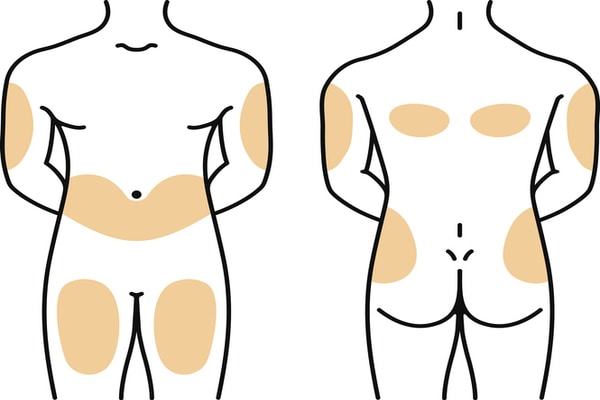
1) Deltoid (IM) — upper arm (when prescribed for IM)
The deltoid is a frequent IM choice when a patient self-injects, because it’s reachable and the anatomy is familiar for many people. In practical terms, I recommend selecting this site only when it’s consistent with your clinician’s instructions for IM administration and when there’s adequate muscle mass.
- Best for: some IM regimens and patients who can access the area comfortably
- Watch-outs: very low muscle mass can make IM delivery less reliable
2) Vastus lateralis (IM) — outer thigh
In real self-injection coaching, the thigh is often a dependable IM site. It tends to have a larger muscle area and is easier to visualize and reach without twisting awkwardly.
- Best for: many patients doing IM injections on their own
- Watch-outs: avoid areas with tenderness, swelling, or obvious irritation
3) Gluteal area (IM) — upper outer buttock/hip region
This is a classic IM location. However, I’ve found it can be more challenging for people to identify accurately, especially when they’re doing it alone. If your clinician recommended this site, it’s still essential to follow their specific landmark guidance to improve safety.
- Best for: some IM protocols where landmarking is taught clearly
- Watch-outs: incorrect landmarking is the main concern—don’t “guess” if you’re unsure
4) Subcutaneous (SC) sites — when your regimen is SC
If your prescription specifically instructs SC injection, the “b12 shot injection site” shifts toward areas where subcutaneous fat is accessible. In my experience, patients do better when they understand the route first: IM targets muscle; SC targets the layer just under the skin. That difference can change both technique and injection site choice.
- Best for: regions your clinician identifies for SC injections
- Watch-outs: don’t use an IM site/approach if you were prescribed SC
How I prepare before the needle goes in (a real checklist)
Before injecting, I use a simple, repeatable checklist. Consistency reduces errors and anxiety—two factors that, in practice, strongly affect how “smooth” injections feel.
Supplies I verify
- B12 medication as prescribed (correct concentration and route)
- Syringe and needle size that matches your prescriber’s instructions
- Alcohol swabs or another approved skin prep method
- Sharps disposal container
- Gauze/cotton if needed for light pressure after injection
Site selection habits that prevent problems
- Inspect the skin: avoid moles, rashes, infected areas, or bruised/tender spots.
- Rotate sites: I tell patients to rotate among approved areas to reduce soreness over time.
- Respect your landmarks: if you’re using an IM site that depends on landmarks (like the gluteal area), use the exact guidance you were given rather than approximating.
Clean technique I stress
I recommend washing hands, using skin prep as directed, and letting the area dry. Rushing skin prep doesn’t make injections more comfortable—it often increases irritation.
Injection technique basics (safety-first, route-aware)
Because instructions vary by product and by whether the injection is IM or SC, I’m going to focus on the principles I teach without substituting for your clinician’s specific step-by-step directions.
Key principle: use the right route and depth
IM injections are designed to deliver medication into muscle. SC injections are designed for subcutaneous tissue. Depth and angle depend on the route and your anatomy. That’s why needle length and angle—prescribed for your regimen—are not interchangeable.
Step pacing that improves comfort
In coaching sessions, a common pattern is rushing. Instead, I suggest a calm sequence: prepare everything first, stabilize the skin and limb so it doesn’t move unexpectedly, and inject with controlled timing as instructed. If you’re prone to dizziness during injections (vasovagal reactions), let your clinician know before starting and consider sitting down for self-injection.
Aftercare that reduces irritation
- Light pressure: if there’s minor bleeding, apply gentle pressure with gauze.
- Monitor the area: mild soreness can happen; worsening redness, swelling, warmth, fever, or severe pain is not typical.
- Don’t massage aggressively: I generally avoid advising strong massage unless your clinician specifically recommends it.
Common problems and what to do
When patients run into issues, it’s usually one of these. In my experience, early adjustment matters—especially with soreness and injection-site reactions.
Soreness, redness, or a small bump
Some local tenderness can be normal. However, persistent or progressively worsening reactions should be discussed with your prescriber.
Difficulty identifying the b12 shot injection site
If you’re unsure—especially for sites that require landmarking—don’t “practice” with guesses. Ask your clinician or nurse to confirm your exact landmarking method and, if needed, observe your first injection.
Missed dose concerns
If you think you missed a dose or you’re unsure about timing, contact your prescriber for guidance. Don’t double up unless they instruct you to.
Quick comparison: injection-site choice (at a glance)
| Injection route | Typical injection site options | Main reason it’s used |
|---|---|---|
| IM (intramuscular) | Deltoid (upper arm), vastus lateralis (outer thigh), gluteal upper outer area | Targets muscle for delivery as prescribed |
| SC (subcutaneous) | Clinician-identified subcutaneous fat areas | Targets tissue just under the skin as prescribed |
FAQ
What is the best b12 shot injection site for self-injection?
It depends on whether your prescription is IM or SC and on your anatomy. In practice, the outer thigh (vastus lateralis) is often an easier IM site for self-injection when IM is prescribed, but the “best” site is the one your clinician specifically instructed for your regimen.
How do I reduce pain at the injection site?
I focus on preparation and technique: clean skin prep with proper drying time, correct site selection, rotating sites, and controlled timing. If pain is severe or reactions worsen, contact your clinician rather than pushing through.
When should I call a clinician after a B12 injection?
Call your clinician promptly if you develop severe or worsening redness, warmth, swelling, fever, significant pain, spreading rash, or signs of an allergic reaction.
Conclusion
Getting B12 injections right comes down to one core skill: choosing the correct b12 shot injection site for the route your clinician prescribed (IM vs SC) and using a consistent, safety-first approach. I’ve seen the biggest improvements in comfort and confidence come from: clear site landmarking, rotating approved locations, and careful aftercare.
Next step: confirm your exact injection route (IM or SC) and the approved injection sites with your prescriber, then practice site identification (with landmarks) before your first self-injection.
Discussion